Seminarians gain mission experience in Taiwan through Maryknoll’s Overseas Training Program as part of their vocational discernment.
The walls of the Maryknoll House in Taichung, Taiwan, are covered with photos of Maryknoll priests and brothers who came here decades ago from the United States. Since the mission society began accepting vocations where Maryknoll serves, the young men who live in the house today look different.
“There’s a new face of Maryknoll in the world,” says Maryknoll Father Joyalito Tajonera, the society’s regional superior for Asia.
Yet no matter where they are from — and as an essential part of their formation — all priest and brother candidates must live and work in a new culture. Father Tajonera leads Maryknoll’s Overseas Training Program (OTP) in Taiwan, which brings some of them to the island nation.
“OTP is not an easy experience,” says Josephat Odundo, a Maryknoll seminarian from Kenya who arrived in 2023 to spend two years in the program. “You have to be comfortable in uncomfortable situations.”
Odundo, now 33, spent his mornings at Providence University in Taichung, wrestling with the myriad tones of Mandarin Chinese. “Learning the language is the most important part of appreciating and understanding the culture,” he says. “The better we can communicate, the more space we make for God’s revelation among the people.”
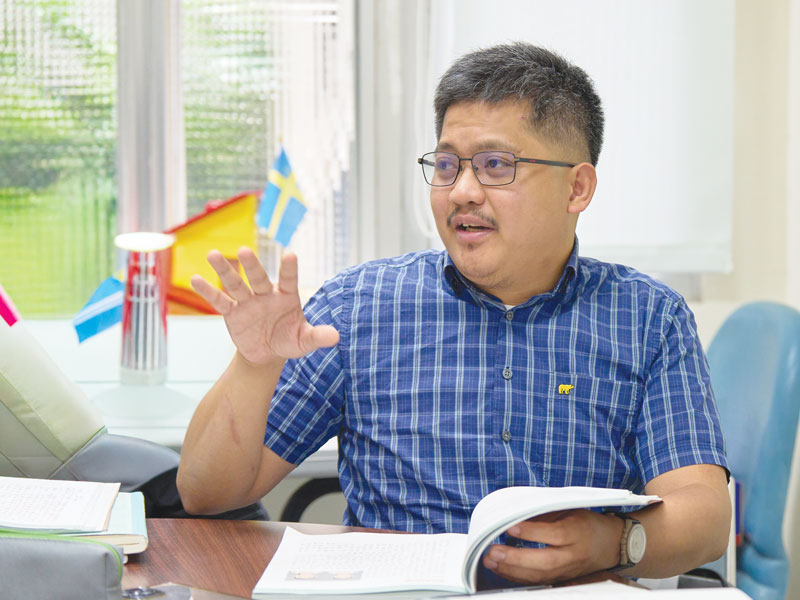
Guilervan Ignacio Omnes considered a career in law but instead set out for mission in Taiwan. Having completed the vocational discernment program, he is now a Maryknoll seminarian. (Paul Jeffrey/Taiwan)
Odundo would spend the rest of the day in the neighborhood of Shalu, where Maryknoll Father Kurt Anderson is pastor of St. Bernadette Catholic Church. There the seminarian served the Chinese-speaking congregation — a role that kept him uncomfortable.
“In Kenya, religiosity is everywhere. Christianity is in our bloodstream. A Catholic priest is always one of the big men in the community,” he says.
“But when I came to Taiwan, where Christians are a small minority, I realized that the simpler you become as a human being, the better you are as a priest. My approach toward priesthood has shifted to just being available and open to the realities of the people I’m working with.”
Odundo embraces the Maryknoll legacy he inherits.
“Go to the cathedral and you’ll learn it was built by Maryknoll. The first Catholic bishop of Taichung was a Maryknoller,” he says. Although “there is pressure when you carry this big name,” he notes, the work of previous missioners “makes my ministry easier because of the foundation they built.”
Maryknollers “did more than build churches,” continues Odundo. “They could interact with anyone.” That closeness to the people, he says, “calls me to be like them.” He is now studying for a Master of Divinity at Catholic Theological Union in Chicago.
Seminarian Paschal Madukwa is currently doing OTP in Taiwan. The physician from Tanzania volunteered with a ministry to homeless people around the Taichung train station while also studying language at Providence University. After a year, he moved to Kaohsiung, a city in the south, to begin a two-year graduate course in tropical medicine.
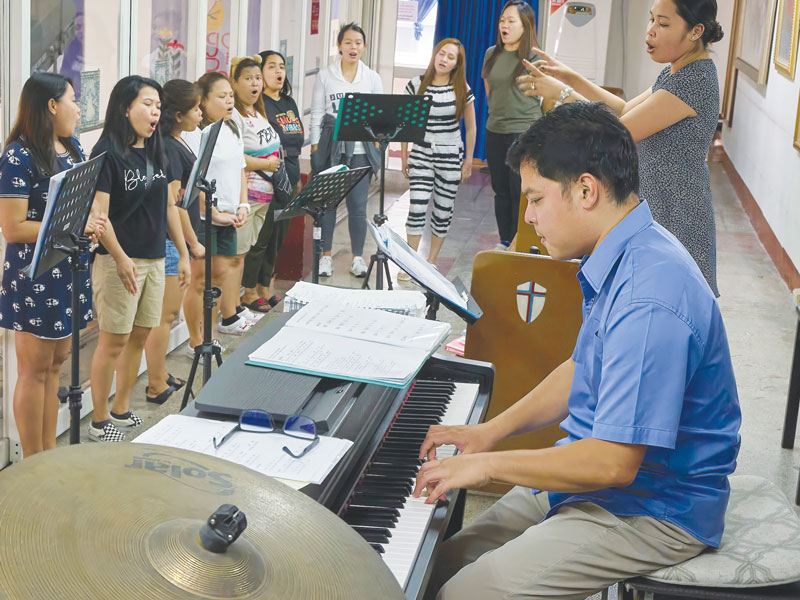
Prospect Jethro Natividad, like Omnes originally from the Philippines, directs the choir of the Tanzi Church in Taichung. Both young men are now officially accepted Maryknoll seminarians. (Paul Jeffrey/Taiwan)
Madukwa says he felt called to the priesthood because he wanted to explore how medicine and spirituality could work together. “Someday I would love to be at patients’ bedsides not only as a doctor, but also providing spiritual accompaniment,” he says. “In the end stage of life, when medical interventions have run their course, being present as a spiritual companion could make a real difference.”
His attraction to Maryknoll, says Madukwa, started back home.
“I saw how Maryknollers from elsewhere had come to Tanzania and worked hard to learn the language and the culture, to relate with local people,” he says. “That inspired me to ask Maryknoll to help me become a priest.”
Madukwa, 33, says his OTP experience in Taiwan is giving him the skills needed for a lifetime in mission.
“If all we did to prepare for the priesthood was study in seminary, it would be like reading a book on how to swim without ever getting wet,” he says.
At first, “we are like babies, coping with a new culture and language. We learn by making mistakes, and OTP provides a safe environment to do that,” he says. “In my first months, I stumbled through the language and the nuances.”
This process takes time, he adds. “We find patience, both with ourselves and others, which allows us to fall in love with the people and their culture. There is goodness in every culture. God is found in every culture,” he says. “People are very generous, even with seminarians who constantly struggle to find the right tone to pronounce the right word.”
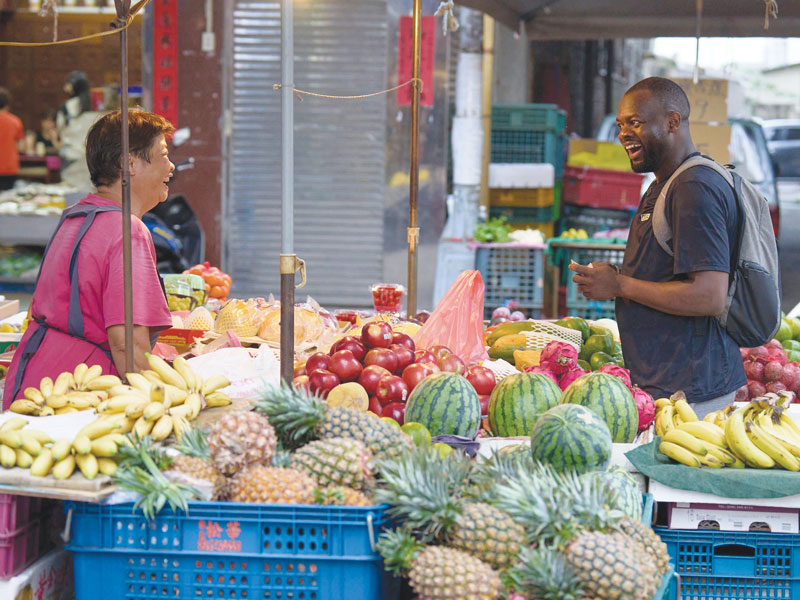
Josephat Odundo, a Maryknoll seminarian originally from Kenya, learned Mandarin Chinese during his overseas training in Taiwan. He now continues his studies for the missionary priesthood with Maryknoll at Catholic Theological Union in Chicago. (Paul Jeffrey/Taiwan)
In addition to supervising OTP in Taiwan for accepted Maryknoll candidates, Father Tajonera has established an earlier first step: a vocational discernment program for “prospects,” young men considering the missionary priesthood or brotherhood.
Jethro Natividad, of the Philippines, was one of them. Having studied at a diocesan seminary and having taught at Miriam College, founded in Manila by the Maryknoll Sisters, he was intrigued by Father Tajonera’s invitation to Taiwan. After a two-month experience at the beginning of 2023, he resigned from his job to discern further. He serves at Ugnayan, the Maryknoll shelter for exploited migrant workers.
“I quickly learned that this is a different understanding of priesthood,” he says. “Here in the shelter, we mop the floors, we wash the dishes, we walk with the people. We’re reminded every day as we live among the migrants that Christ didn’t come to earth as a mighty conqueror but rather as a poor baby who grew into a humble man.”
Natividad also directs the choir of the Tanzi Catholic Church, where the congregation is mostly composed of Filipino migrants.
“Every Saturday morning we have choir practice. Even though many of them worked the night shift and just left the factory at 8 a.m., by 9 a.m. they are at church, ready to sing,” he says. “They practice the songs all week long, and on Sunday morning they offer their talent to the Lord.”
While Natividad plays the piano, Guilervan Ignacio Omnes — who also joined the vocational discernment program — accompanies the church choir on his violin.
Omnes had left a diocesan seminary in the Philippines to pursue law in order to help victims of injustice. On the eve of entering law school, however, he heard about Maryknoll’s vocational discernment program and headed to Taiwan, instead.
“One cold winter night, well after midnight, a guy showed up at our Ugnayan shelter, shivering in bare feet. He was a seafarer who had just escaped from his ship, where he didn’t get enough food or sleep. From the moment I welcomed him into the shelter, I knew what I wanted to do with my life,” Omnes says.
Omnes and Natividad applied to the mission society and were recently accepted. They are now officially Maryknoll seminarians.
Working with Father Tajonera, Omnes says, has “ignited a fire of vocation” in him — a flame that is fanned by challenge. “Father Joy is always telling us to be ready for whatever people will need,” the seminarian says.
“Shortly after our arrival, Father Joy told us we were going somewhere. Jethro and I packed heavy bags,” Omnes recalls. Then Father Tajonera told them to repack and take only the bare minimum. “Mission, he told us, is never about us. It’s about them.”
Featured image: Maryknoll Seminarian Paschal Madukwa, a physician from Tanzania, is preparing for the missionary priesthood through overseas training in Taiwan. (Paul Jeffrey/Taiwan)