WEB-ONLY:
A Maryknoll Mission Formation immersion trip introduces participants to the realities, chalenges and hopes of local communities.
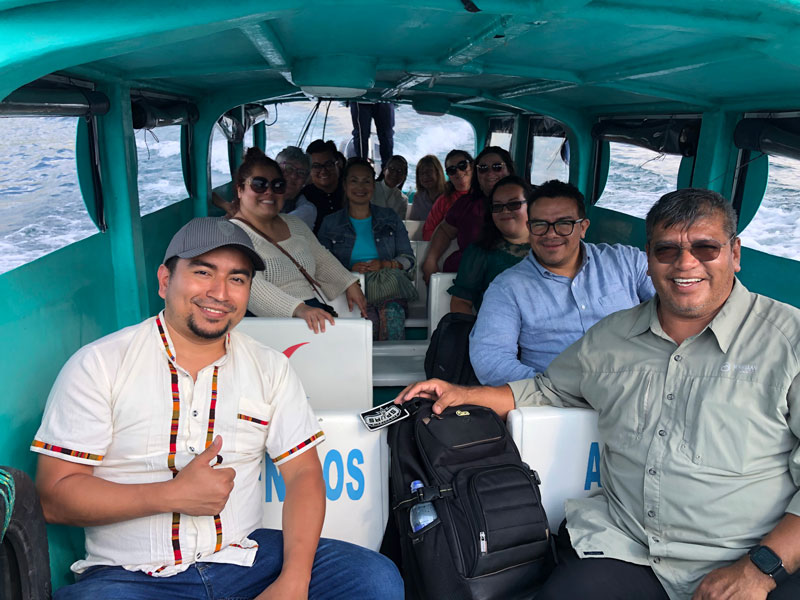
The trip last July was guided by Deacon Leonel Yoque, a member of Maryknoll’s Mission Formation Ministry, and Marcos Guerrero Martínez, who manages volunteers at CRS. “This collaboration offered participants not just a window into development work but a transformative encounter with resilience, faith and solidarity,” Martínez says.
Maryknoll and CRS worked together to introduce us to a country that endured a bloody 36-year civil war between government forces and insurgents, including genocidal massacres of the Indigenous Maya population. The Guatemalans we met referred to this as “the time of violence.”
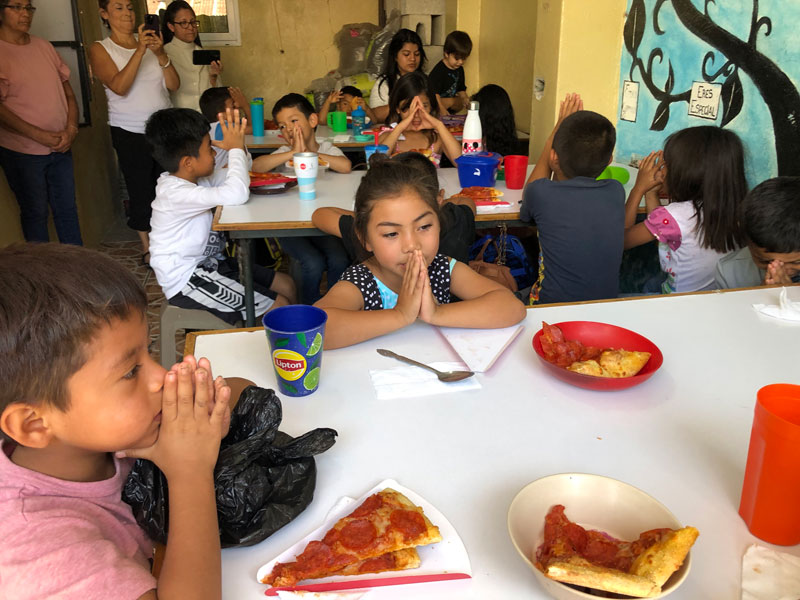
We started off at Caminando Por La Paz (Walking for Peace), a neighborhood center founded by the late Maryknoll Father Thomas Goekler to help young people in Central America overcome poverty and gang violence. We enjoyed meeting children as they came for their midday meal, and watched as Sister Eva Rodriguez, a trip participant, taught them about the mission rosary and the beauty of the continents.
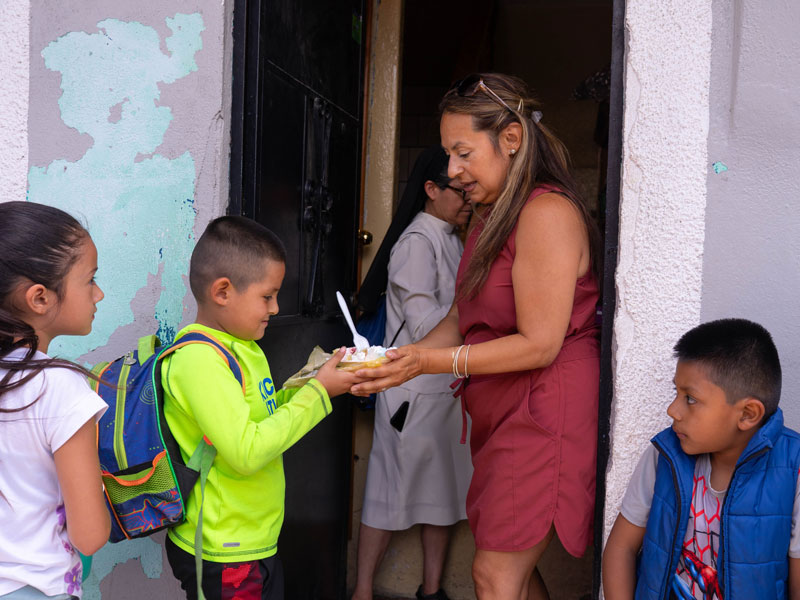
We were greeted with smiles when we toured the neighborhood with one of the site’s volunteers. With my new friends, I carefully walked down steep cement stairs. We passed houses with roofs of corrugated metal, improvised drainage systems and colorful clothing hanging in the hot sun.
Back at the center, we helped serve tamales. Once the children left for home, we enjoyed a meal with the staff, including 90-year-old Ron Covey, a Maryknoll affiliate who has been volunteering at Caminando Por La Paz for 23 years. Covey filled the gap after Father Goekler passed away in 2010.
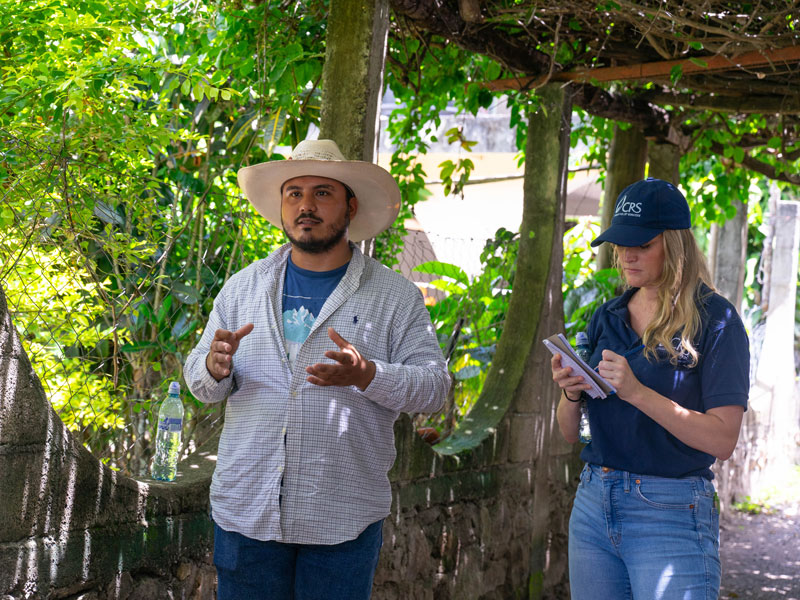
One of the workers, Jessica, told me about a major CRS project that had to be stopped due to abrupt funding cuts to the United States Agency for International Development (USAID). She asked me if I had hope that funding would be restored. I replied sadly that I didn’t. My heart broke as I saw her face fall. She was so welcoming to our group, even though U.S. support for her work is now unreliable.
We met Brandon, a young farmer in the same community, who learned from CRS members how to raise crops for profit on a very small plot of land. He proudly showed us his farm with garden beds that produce 2,500 pounds of tomatoes, and that are encased in pest netting and irrigated by a drip water system.
Heidi Villaluz, another trip participant, describes Brandon’s work as having an important ripple effect. “His successes have already been a tide that raised many boats: financial security for his multigenerational family, leadership and mentorship among other youth in the program,” she says. “In a country where more than half of the population is under the age of 25, resilience and accomplishment can relieve some of the pressures on youth to leave their rural homes, or even their country.”
In Guatemala City, we visited Casa del Migrante, a shelter where Maryknoll brings immersion trip participants every year to raise awareness about immigration. Casa del Migrante also lost its USAID funding, which had been delivered via the Norwegian Refugee Council, an international humanitarian organization. Their staff has been cut recently from nine to four people.
The shelter houses people who have been deported from the United States and are now returning home. Returnees stay for a few days until they reconnect with family. Food is served, bedding provided and a welcome is extended as guests figure out the next phase in their journeys. Most guests are without funds, since usually their extended family had already pooled their savings to get their family member to the States in the first place.
While we were there, our group was informed that 120 deported Guatemalans had just landed, and Casa del Migrante staff had gone to the airport, in case someone needed help.
The people we met in Guatemala were warm, gracious and welcoming. I felt a sense of love for and from them, even though my brain had a hard time processing the injustice of their lives and our country’s lack of empathy for them.
Preparing for this trip, I had not been sure what to expect. Our goal, Deacon Yoque said, was to witness local projects firsthand, and to understand their collective impact. The trip certainly accomplished that.
But Martínez says the Maryknoll and CRS collaboration was more than a trip. “It was a tapestry of encounters, challenges, and shared hope,” he says. “Participants returned with hearts woven together with the people of Guatemala, ready to inspire and support the mission of CRS and Maryknoll.”
This experience has changed me. Now, I will seek ways to support my Guatemalan brothers and sisters and promote social justice here and abroad by sharing my mission treasure.
Marcos Guerrero Martínez contributed to this article.
Featured image: Participants in the Maryknoll Mission Formation Ministry immersion trip, including Donna Knudson (back row center, wearing white shirt and glasses), visit the Santa Catalina Arch in Antigua Guatemala. (Courtesy of Leonel Yoque/Guatemala)