A Maryknoll sister in Guatemala trains women in poor communities to become advocates known as community legal promoters.
As a young wife and mother, Luz Elizabeth “Lux” Hernández endured domestic violence from her husband. Then, she recounts, “My husband started getting sicker and sicker.” When he passed away, she was left with two young daughters, an 18-month-old toddler and an infant of six months.
“His family knew what he died of, but they never told me,” she says. “Then the doctor from the hospital sent me an order to get tested for HIV.”
Lux was tested at Project Life, founded in Guatemala in 1994 by Maryknoll Sisters Delia “Dee” Smith and Jean Yamashiro (who later retired and returned to the United States) for people at risk of HIV/AIDS. The result was positive.
She and her daughters were left impoverished, Lux says, and her late husband’s family treated her with “cruel discrimination.”
Project Life became a beacon of hope for the young widow. With the organization’s support, Lux began taking antiretroviral medications, which stabilized her condition. She participated in programs that taught her how to live with the virus. “Thanks to the mutual support groups, I got more involved. I kept on learning,” she says.
Lux, who had studied only up to sixth grade, went back to school. She attained her high school diploma and certificate in practical nursing. A decade after joining the Project Life staff, Lux earned another certificate: she is a community legal promoter, educating and helping others to advocate for their rights.
“Lux and I complement each other,” Sister Dee says. “I’m a teacher with a background in pedagogy. When we give workshops, I facilitate. But Lux speaks from experience. She’s a survivor.”
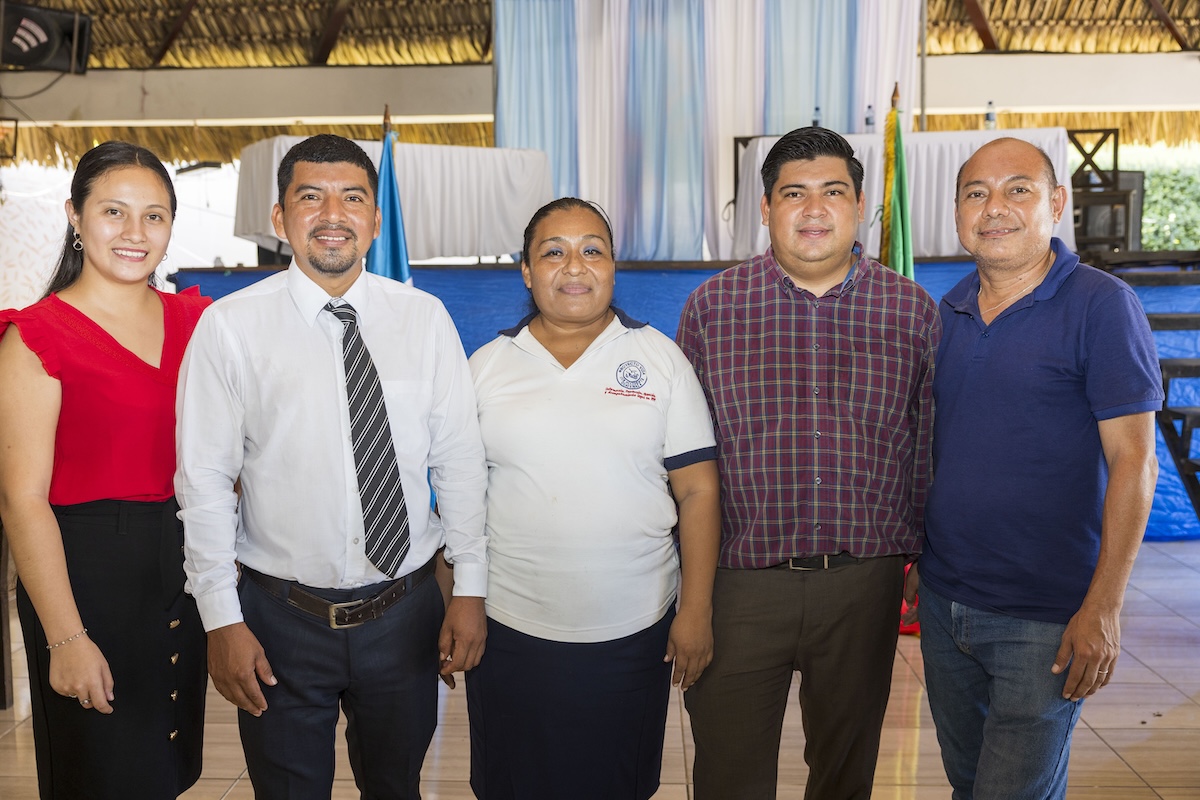
Bielman Juárez Ambrocio volunteered with Project Life from an early age, giving health education talks to other youth. In addition to offering free HIV testing and prevention programs, he says, Project Life campaigned for the opening of HIV/AIDS clinics in the area’s national hospitals. “Coatepeque (in the department, or state, of Quetzaltenango) was the only clinic to cover this large zone,” he says. In 2009 and 2014 clinics were opened in the neighboring departments of San Marcos and Retalhuleu.
Bielman, who completed an internship with Project Life in 2013 and joined its staff a year later, explains, “We were working with the personnel of the HIV/AIDS clinics to ensure that patients received adequate care, without discrimination, because sometimes doctors and nurses mistreated HIV-positive people.”
In recent years, Project Life has widened its focus.
“We were seeing so much violence against women in our rural areas” at the hands of spouses, in-laws and relatives, Lux says. “Women who had been beaten would go to the clinics, and the doctor would just give them medicine without referring them elsewhere to address the violence they were living with.
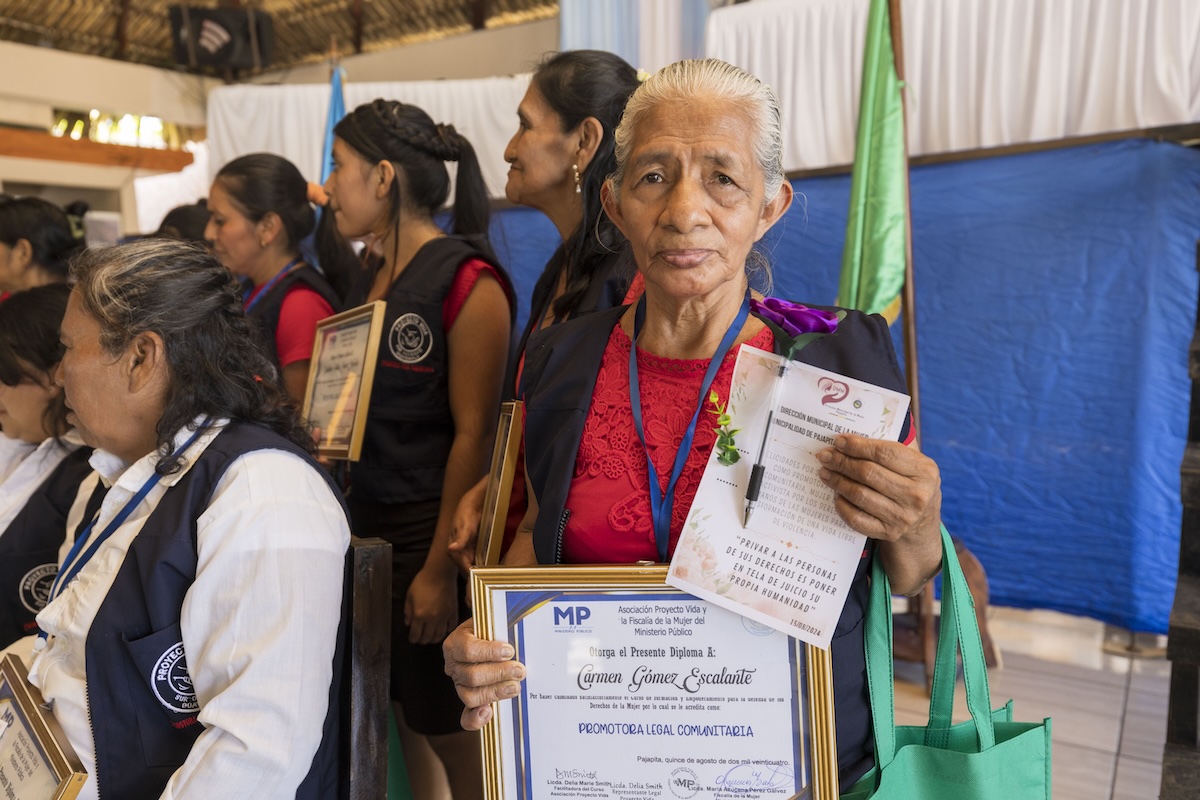
“The idea arose to offer trainings so that women are empowered and know their rights,” Lux says, “and also become leaders in their communities.” These leaders — called legal promoters — help other women, as well as men and children, to access services and to denounce violence or discrimination to authorities. Certified herself in 2019, Lux is key to the program.
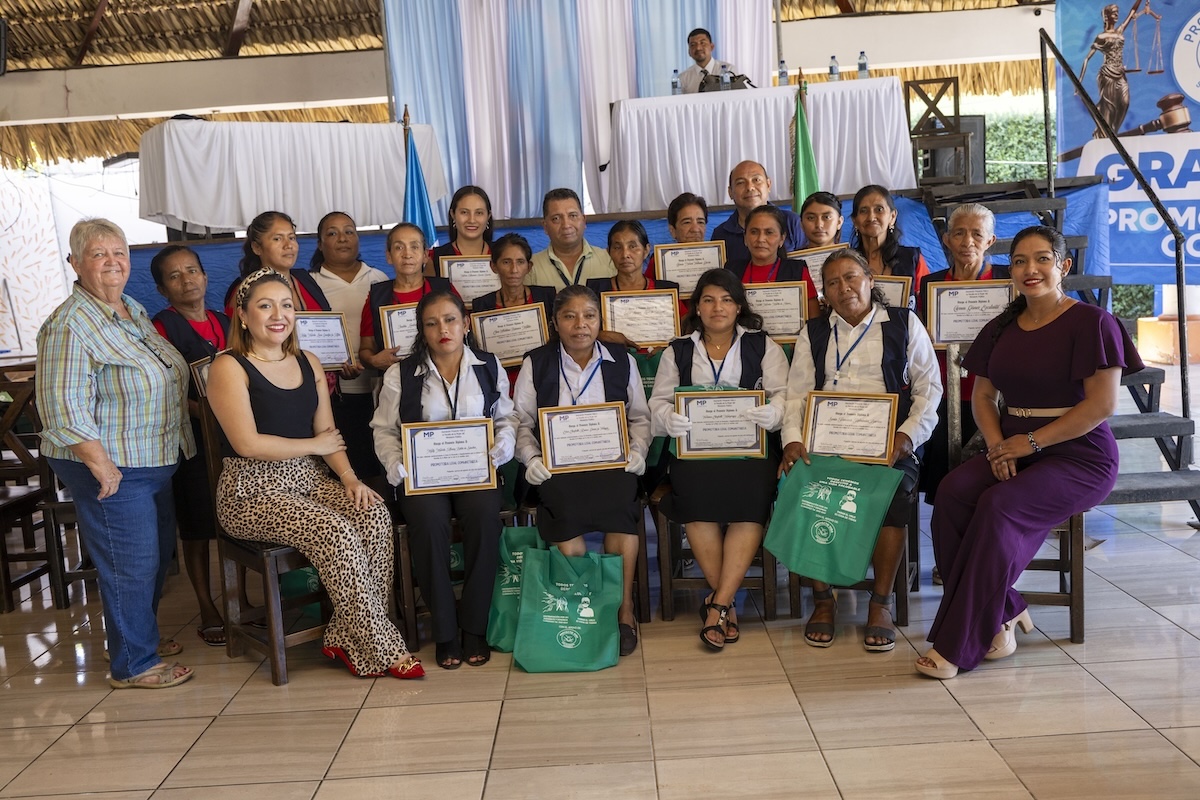
Since the team launched the community legal promoters training program seven years ago, two cohorts have graduated. Candidates for the course come from the three departments where Project Life works. The first cohort yielded 20 graduates.
“There is no other group like this in the entire area,” said María Azucena Pérez Gálvez, who works for the municipal prosecutor’s office, at the graduation ceremony for the second cohort. “They lend a friendly hand.” She noted that 75% of Guatemalan women are victims of violence.
Training for the two cohorts was funded by UNAIDS and Misereor (the German Catholic Bishops’ Organisation for Development Cooperation). However, since UNAIDS has lost half its funding, which had come from the now-discontinued U.S. Agency for International Development, Project Life is seeking other sources of support to launch a third cohort.
Project Life maintains its offices at Hospicio Santa María, a residential hospice and organic farm for HIV/AIDS patients cofounded by Sisters Dee and the late Maryknoll Sister Marlene Condon in the small town of Pajapita, San Marcos. Workshops take place in the property’s large conference room. “Some women leave home at 4 in the morning to get here,” Sisters Dee says.
The program uses simple but effective teaching techniques. “We don’t hand out a lot of material, because our first methodology is for participants to express themselves and draw on the resources they already have,” Sister Dee says. Role play, dynamics and case studies support the curriculum: “Many of the women do not read or write well, but they have the capacity to listen and retain.”
An important skill they work on, she continues, is the ability to speak up for themselves or on behalf of others — not an easy task for women without much formal education. The 18 women of the second cohort, she says, “developed dexterity in expressing themselves publicly.”
Nancy Martínez, who graduated in 2022 with the first cohort, overcame her spouse’s initial opposition and went on to assist several women in situations of domestic violence. “You have to start in your own home, from the inside out, to be a good promoter,” she says. “And you have to gain the victims’ trust. People have come to my house for help at one or two o’clock in the morning.” She adds, “Now my husband says to me, ‘I admire you, because you learned to be a woman who defends others.’”
Karina Sánchez, who graduated with the second cohort two years later, says that in her community people often hide the violence or discrimination they experience. They suffer in silence, she says. “I have put myself at their service,” she says. “When they decide to speak up, we are there to accompany them, so they know they will be protected.”
A promoter from the second cohort who is HIV positive, identified here by her first name, Lucía, had been turned out of the house by her two sons and daughter-in-law. They were afraid, she says, to eat with her at the table. “I gave them a lot of advice from the program,” Lucía says. “I learned, and I also taught my community.” Although she still lives elsewhere, now her sons welcome her home.
For Lux — who had gone through similar problems — working for Project Life brings its own reward. “It motivates me to see these two groups of designated legal promoters,” she says. “They go back to their communities to help other women.”
Featured image: Luz Elizabeth “Lux” Hernández (left) and Maryknoll Sister Delia “Dee” Smith (right) formally instate a candidate as a community legal promoter, conferring a vest, identification badge and diploma. The program led by Lux and Sister Dee culminated in a graduation ceremony for 18 participants on Aug. 15, 2024, in the town of Pajapita in the department of San Marcos, Guatemala. (Octavio Durán/Guatemala)