
A Maryknoll priest and his partners in mission assist migrant fishers in Taiwan.
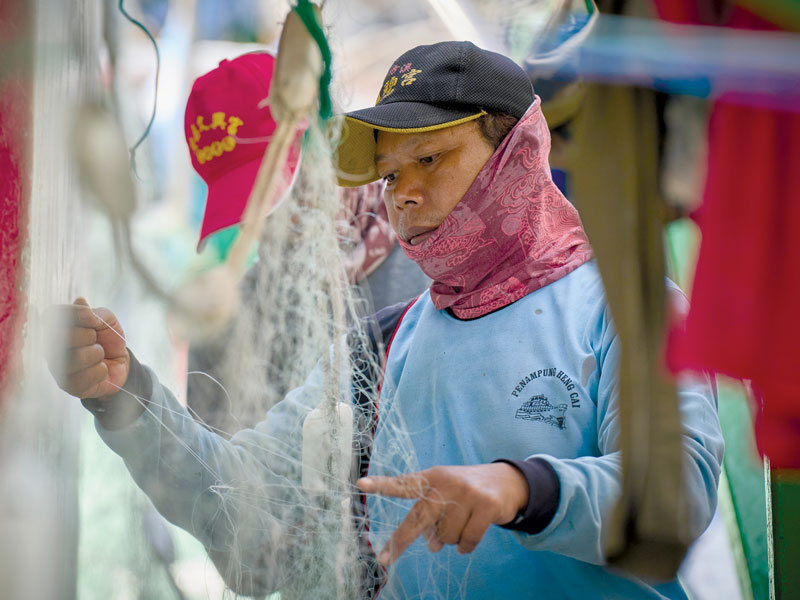
Gerald Mustago left his home in the Philippines eight years ago to become a fisher in Taiwan, home to the world’s second largest deep-sea fishing fleet.
“I couldn’t make enough money to support my wife and children, so I came here to work on the fishing boats,” he says. Every month he sends a few hundred dollars home to his wife and two children.
Mustago works on a ship that docks in Taichung Harbor but is never moored there for long. He spends weeks on end working the nets as his ship chases fish stocks being depleted by overfishing. Some Taiwan-based boats travel as far as Africa, relying on more than 20,000 Indonesian and over 7,000 Filipino migrants to do the hard work.
And the work is truly hard, says Mustago, who often must work 10- to 12-hour shifts.
“Other times I’ll rotate with another fisher,” he says. “I’ll work for two hours then rest for two hours while the other guy works. Then we’ll switch again, over and over throughout the day and night.” Mustago adds that the boat once ran aground off the coast of Japan when the captain fell asleep at the helm.
Maryknoll Father Joyalito “Joy” Tajonera, who directs the Taiwan chapter of Stella Maris, the Catholic Church’s maritime ministry for seafarers and fishers, says inadequate sleep is just one of many challenges.
“It’s not sleep; it’s a nap. And it’s a very cramped sleeping space,” he says, describing an overall “dangerous work environment.”
Father Tajonera came to Taiwan in 2002 to serve migrant workers from the Philippines. His ministry includes a bustling shelter and a lively Catholic community centered in Taichung.
Most migrants in Taiwan work on land, in factories that crank out computer chips, camera lenses, ball bearings and a wide variety of industrial components. The smaller number of migrants who work the boats aren’t as visible, since they spend so little time ashore.
Yet Stella Maris — a worldwide network — is present in several Taiwanese ports.
“When we first started coming to the port, communication was a big issue for the seafarers and fishers,” says Cecilia Huang, who since 2012 has coordinated the group’s presence in Taichung. “They had no way to keep in touch with their families back home, much less have access to information about their salaries and rights. So we brought a laptop with us and used Skype.” The volunteers would share food, clothing and other items with the fishers. “Sometimes the ship captains would invite us aboard to celebrate Mass,” she says.
“But we also listened,” she continues. “They told us about their difficulties with dishonest recruiters, illegal salary deductions, long hours and abuse, and how they had to stay on the boat even though it was docked. As we heard their complaints, we educated them about their rights and encouraged them to reach out to the Taiwanese government for help.”
In recent years the Taiwanese government has become more responsive to the complaints of migrant workers. Yet the work of fishers is handled by the government’s Fisheries Agency, part of the Ministry of Agriculture, rather than its Ministry of Labor. Sea-based migrant workers simply don’t get sufficient official attention.
“If they’re out to sea they are out of sight, and thus out of luck,” Father Tajonera says.
The priest advocates for Wi-Fi on board vessels, which would allow workers to monitor their salaries, report labor violations and keep in touch with their families back home, he says.
Father Tajonera — who has modeled his shelter on Catholic Worker houses of hospitality — is quick to respond when called upon for help for migrant fishers, Huang says.
“I just call Father Joy. ‘No problem,’ he always says. ‘Just come.’ He makes space for them in the shelter, listens to their stories, and helps them figure out what steps to take to defend their rights,” Huang says.
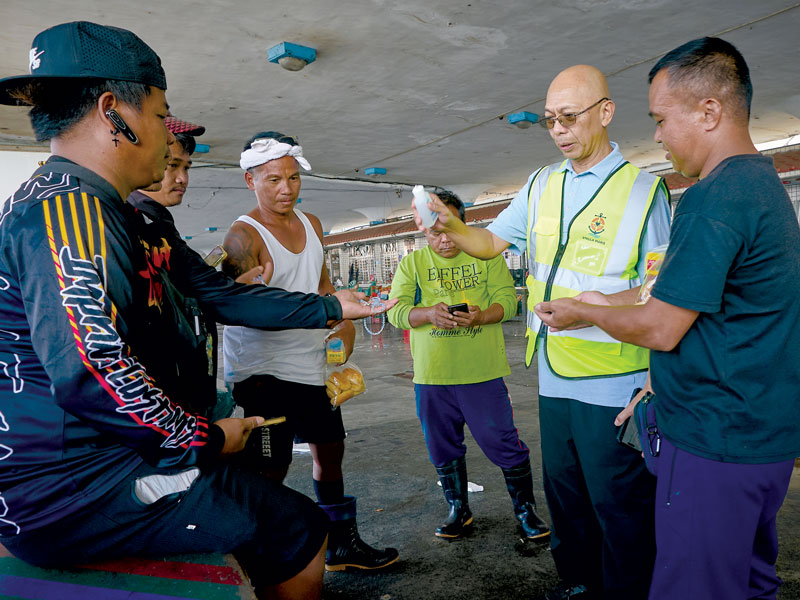
“We get referrals from the Fisheries Agency and from immigration,” Father Tajonera says. “They’ll call up and say, ‘A boat is stranded here, and the workers have no place to go. Can you shelter them?’ We always say yes.” He adds, “We welcome everyone.”
Father Tajonera and Huang often coordinate with other Stella Maris organizations. “When a fisher has problems in a foreign port,” the missioner explains, “the local Stella Maris people can reach out to their counterparts in the worker’s home country and work together to resolve their immediate problems.”
They also collaborate globally with environmental groups and labor organizations. In May of 2024, Father Tajonera coordinated a conference in Taichung that brought together people from around the world who are working for fishers’ welfare. The participants committed to keeping up pressure on the fishing industry and regional governments to combat human trafficking and slavery at sea.
Taiwan’s government has been particularly singled out. In September of 2024, fish from Taiwan was put on the U.S. Department of Labor’s “List of Goods Produced by Child Labor or Forced Labor.” It was the third consecutive listing of Taiwan in the biennial report.
Then in December, the environmental organization Greenpeace published a report stating that it has received 10 reports from migrant fishers who allegedly experienced forced labor and illegal fishing on Taiwan-based boats. The workers named 12 Taiwanese vessels accused of confiscating identification documents from workers, with some ships practicing debt bondage.
Taiwan’s Fisheries Agency has responded to the pressure by increasing the monthly wage for migrant fishers to $550, ensuring direct and full payment of wages and launching a fund to subsidize Wi-Fi. Officials at the agency say it has increased insurance coverage for fishers, installed video surveillance on some ships, improved labor and living conditions and better managed recruitment agents. They have hired new inspectors to guarantee compliance.
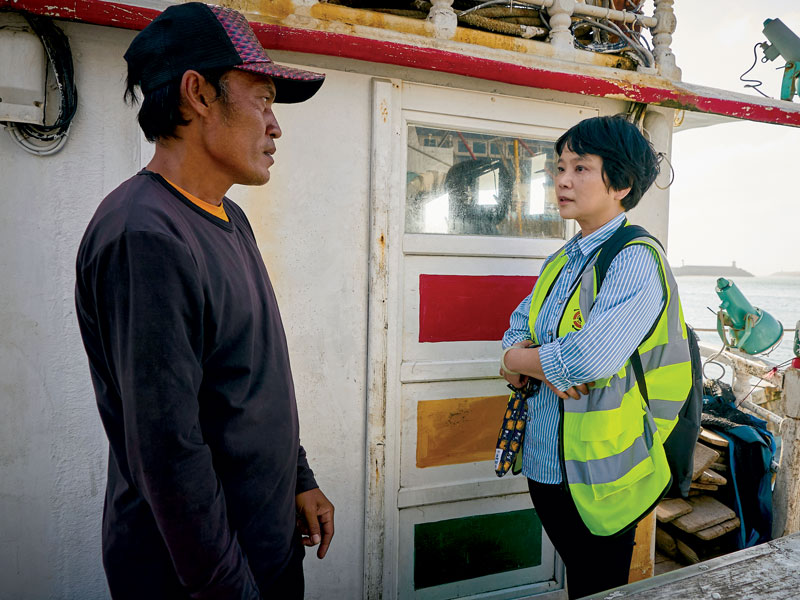
Cecilia Huang, coordinator of Stella Maris ministry in Taichung since 2012, says that listening to the concerns of migrant fishers is essential to the mission she shares with Father Joy. (Paul Jeffrey/Taiwan)
Father Tajonera believes the next step is to turn the spotlight on the companies that acquire the fish.
“It’s not enough to visit the fishers in the port or welcome them to our shelter. Those are important ministries, but if things are going to change, we’ve also got to focus on who buys the fish,” he says. “What’s their public commitment to corporate social responsibility, to basic human rights? What are they doing to stop overfishing?”
According to Charles Niece, director of Maryknoll’s human rights and supply chain transparency project in Taichung, pressuring seafood corporations to honor environmental responsibility and labor rights has long been a challenge because of the difficulty in tracing fish from its source to the final consumer.
“Maryknoll helps individual fishers present their cases to the authorities, but we’ve had a hard time raising the issues with corporate buyers because of the lack of traceability,” Niece says. “We’re working with the Interfaith Center on Corporate Responsibility and other NGOs to encourage seafood buyers to improve their policies.”
Niece says workers’ advocates are overcoming this obstacle. In its December report, Greenpeace used the code stamped on cans of one brand of tuna sold in the United States to identify the individual boats that had caught the fish inside.
“Working with other NGOs,” Father Tajonera adds, “we’ve become a leader in pressing for change through following the supply chain that leads to that can of tuna in your neighborhood supermarket.”
Paul Jeffrey is a photojournalist who works around the world with church-sponsored relief agencies. Founder of Life on Earth Pictures, he lives in Oregon.
Featured image: Maryknoll Father Joyalito Tajonera, who serves in Taiwan, ministers to migrant fishers as part of the Catholic Church’s worldwide apostolate providing pastoral care to seafarers. (Paul Jeffrey/Taiwan)