Maryknoll lay missioners in East Africa lead a course in nonviolence and conflict resolution.
Joanne Blaney and I, Maryknoll lay missioners, were invited to Northern Uganda last year by the Archdiocese of Gulu. Much of our work took place in the shade of huge, leafy mango trees laden with ripening fruit.
The Gulu area is largely populated by a Nilotic ethnic group called the Acholi, whom I first met three decades ago. These resilient people, who had survived the Idi Amin military dictatorship of the 1970s, face cattle-raiding and land takeovers.
Current conflicts are exacerbated by past trauma. For over 20 years, the people suffered from what they call “the insurgency,” a reign of terror carried out by the Lord’s Resistance Army beginning in the mid-1980s. Boys were abducted to be child soldiers, and girls as young as 9 years old were subjected to horrific abuse. Those who avoided capture recalled with anguish spending their childhoods hiding in the forests. Most had family members killed.
“Our history is violence, violence, violence,” says Yasinto Okot, director of the diocesan Justice and Peace team. Joanne and I collaborated with the team to offer Trauma Healing, Nonviolence and Restorative Justice training courses for 60 parish and community leaders and 25 religious sisters. The first phase took place at central locations. In the second, we traveled with our Ugandan colleagues to reach the participants who had attended. In four months we covered a lot of ground.
Most of the 32 parishes represented are in outlying villages — some very remote — as far as the South Sudan border. Some days we drove for hours on rutted dirt roads in sweltering heat. At the end of each road, we were welcomed by catechists, religious sisters, teachers and community leaders. Seated on rickety wooden or plastic chairs, we were sheltered by the cooling shade of magnificent old mango trees, occasionally dodging as we heard a cracking sound above — sign of an impending mango falling!
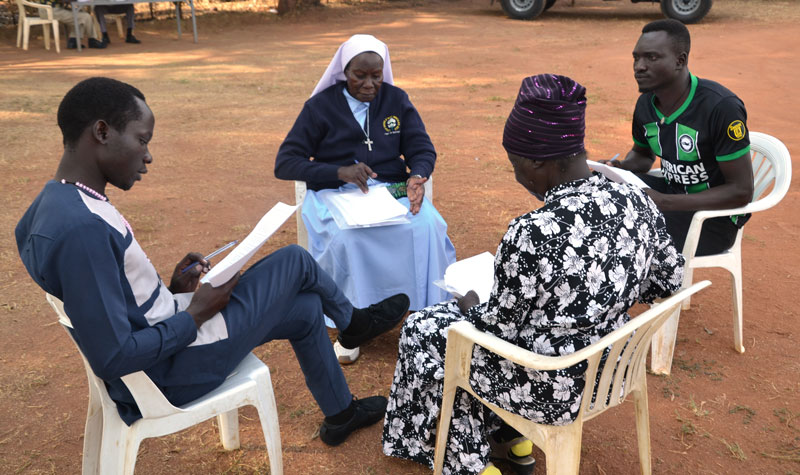
The course taught them, many said, that nonviolence starts in their own hearts. Joanne recalls the insights of two participants. “I was very angry,” one said. “I used to beat my children. Now I listen and dialogue with my family and the community leadership team.” Another, who is a teacher, said, “I changed how I interact with the students. [Before the course] I did not listen, and my way of communication caused more conflicts. Now I bring them together.”
Under the mango trees, they described learning to manage grief and anger, dialogue effectively and consider each side of a story. “It is not about forgetting, but about seeing with new eyes,” Joanne explains. “Never justifying violence, the goal is to transform resentment and heal the wounds caused by conflict, violence or distrust.”
Joanne recalls that in one of the farthest outposts, a catechist named Charles told about mediating between two feuding families. The family of a youth who was killed was threatening to avenge his death.
Charles was called to the conflict at a moment of high tension. He calmly listened to each family individually and then brought them together, facilitating discussion and avoiding further bloodshed.
The parish priest there said, “We need to learn much more of this method, and I hope we can train many, many more parishioners.” He added, “You see, much goes on out here in our mango tree cathedrals!”
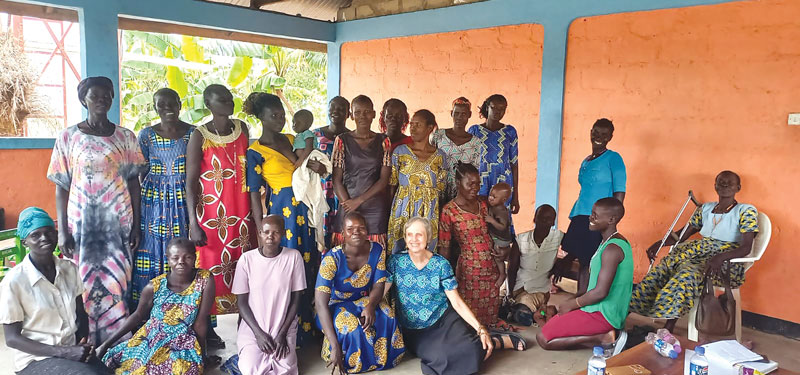
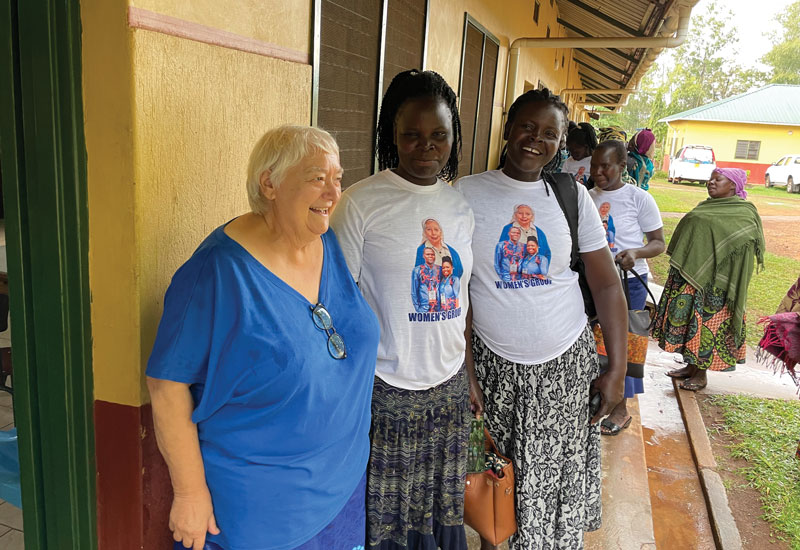
On International Women’s Day, we were invited by Comboni Sister Giovanna Calabria to meet 30 women she works with. Sister Giovanna, who came from Italy in 1971, served in Uganda throughout the worst years of the insurgency. During that time, another Maryknoll lay missioner, Susan Nagele, and I had offered medical care for Acholi refugees. Doctor Susan, a physician, reflects, “The Acholi, especially the women, are a group with hurt so deep it almost cannot be plumbed.”
The women accompanied by Sister Giovanna told of being abducted as children or teenagers by the Lord’s Resistance Army. All were sexually and physically abused during years in captivity. The hardest part of their ordeal, however, began when they returned home. Instead of being met with welcoming embraces, they were rejected as outcasts. The children they brought with them — fathered by LRA soldiers — were seen as cursed and kept out of schools and family homes. Two decades later, these women and their children (now adolescents and young adults) remain isolated and stigmatized.
During our four months in Uganda, Joanne and I met with about 200 women in similar situations.
We also spent time in Palabek Refugee Settlement, graciously hosted by Salesian Father Ubaldo Andrake. There we spent several weeks with refugees who have fled into Uganda to escape civil war in South Sudan — and whose trauma is compounded by hunger.
Time and time again, Joanne and I saw immediate evidence of the sudden, unexpected cuts to foreign aid by the Trump administration — but nowhere as stark and heart-breaking as in this refugee camp. While we were there, World Food Programme officials were visiting to inform people that the food supply was nearly finished.
Little Sister of Mary Immaculate of Gulu Zipporah Waitathu, a Kenyan, lives and works in the camp. She introduced us to its women’s groups. We heard stories of the horror and peril that had forced the women refugees from their homes.
Now, after reaching “safety,” they have no way to feed their families. One mother told of going into the forests to find leaves to boil for dinner. There is no trauma worse than not being able to feed your child, she said.
As the women told their stories, they expressed some relief at simply being heard. They learned that they were not alone. As Archbishop Desmond Tutu wrote in The Book of Forgiving, “When you tell your story, you no longer have to carry your burden alone.”
Joanne and I taught exercises for dealing with stress, but we also identified helpful techniques that the women were already using in their everyday lives. These included putting hands on a tree or walking barefoot on grass for strength and comfort; talking to another woman for support; taking time out for prayer and silence; and hitting the ground with a stick to release fear and anger. The women were delighted to realize they could continue to learn from one another even after Joanne and I left.
Joanne returned to her mission in Brazil, and I moved on to my assignment in Kenya.
It was an honor and a privilege to be entrusted with sacred stories on the holy ground that is Northern Uganda. Indeed, much goes on in these mango tree cathedrals — places of profound living homilies bearing witness to great faith, perseverance and hope.
Featured image: Maryknoll Lay Missioners Joanne Blaney and Marj Humphrey (center, right) collaborated with Yasinto Okot, Patrick and Lucy of Justice and Peace team of the Gulu archdiocese during a four-month mission in Northern Uganda. Blaney has worked in restorative justice for decades and Humphrey previously served 20 years in East Africa. (Courtesy of Maryknoll Lay Missioners/Uganda)